
AIR Analysis
A Good Life Still Out of Reach for Millions
More than one-third of adults in the U.S. don't have access to what they need to thrive.
Explore Findings
Adult population with two or more challenges in
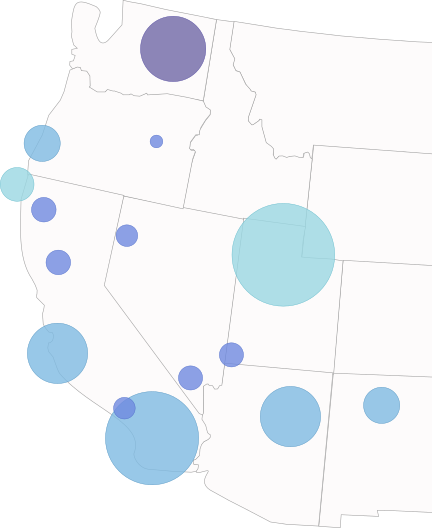
More than 1 in 3 American adults ages 25-64 (37%) face at least one challenge such as low income, limited education, lack of health insurance, or unemployment, and 16% face two or more of these challenges simultaneously. Significant differences – opportunity gaps – exist among urban, suburban, and rural places; and among different racial groups.
Search 731 urban, suburban, and rural places...
Bakersfield-Delano, CA
of all adults 25-64 face two or more challenges

Baton Rouge, LA
of all adults 25-64 face two or more challenges

Birmingham, AL
of all adults 25-64 face two or more challenges

Bridgeport-Stamford-Danbury, CT
of all adults 25-64 face two or more challenges

Interactive Map
Explore opportunity gaps by place type and demographics
About the Hub
What is the Evidence Hub?
The Evidence Hub, created by the AIR Opportunity Fund, enables local leaders, policymakers, and funders to use data to help their communities thrive. Whether you're working to expand access to health care, improve schools, create good jobs, or build more prosperous neighborhoods, the Hub gives you clear, easy-to-use information to guide action.
As our partnerships grow, we'll keep adding new data and stories about what's working—and where there's more work to do—across the country.
What do we mean by a good life out of reach?
These challenges can hinder people's and communities' ability to thrive:
Low Income
Households earning below 150% of the federal poverty level
Limited Education
Adults without a high school diploma or equivalent
No Health Insurance
Adults without health insurance
Unemployment
No working adults in the household
Neighborhood Poverty
Living in an area where more than 1 in 5 people are in poverty
Multiple Challenges
Experiencing two or more of the above
About the data
The AIR Opportunity Fund uses data to better understand where barriers to economic opportunity overlap and how these patterns differ across communities. Our analysis of the U.S. Census Bureau’s 2022 American Community Survey examines five measures: household income, education, employment, health insurance, and neighborhood poverty.
Data are one source of evidence. We combine what we learn from the analysis with local knowledge, relationships, and community priorities to better understand where deeper engagement and investment may be valuable.